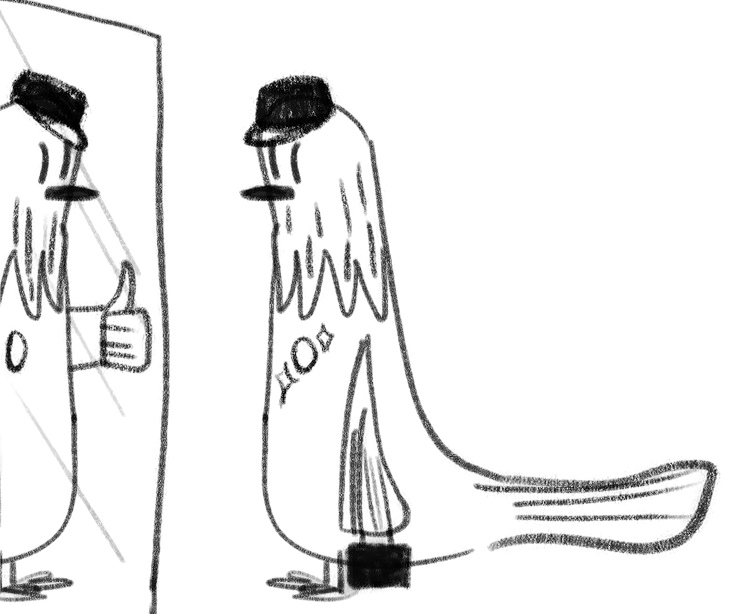
The Origin of Obel
At the beginning, I was searching for a way to hold important messages—something more lasting than a passing notification, something that could carry care, memory, and meaning.
I first looked at traditional symbols of permanence, like the obelisk. But its form felt too distant and too rigid for what I wanted to express. So I kept searching for other materials that could carry this responsibility: gems, shells, trees, and more.
In the end, I came back to stone.
Stone has always been a vessel for human expression. It can be carved, preserved, and left behind. Unlike something fragile or temporary, a stone feels steady—it can hold words, memories, and the weight of care.
That led me to birds. I found that some birds collect small stones and place them near their nest or among their flock as a quiet sign of care. That felt meaningful: a small object, intentionally left behind, carrying a message without needing many words.
And if a message needs to be delivered, there has always been a messenger: the pigeon.
That is how Obel came together.
A stone to hold the message.
A pigeon to carry it.
The idea is simple: one day, a small stone appears on your windowsill. Someone wanted you to know they cared. Someone had something to say, even if they could no longer say it in person.
Obel was built from that image—a way to leave behind messages of care, and to make sure the people we love are never left with silence alone.